Bird Coloring Page for Kids 2 - KDP
A Designer’s First Glance: Charm Without Clutter
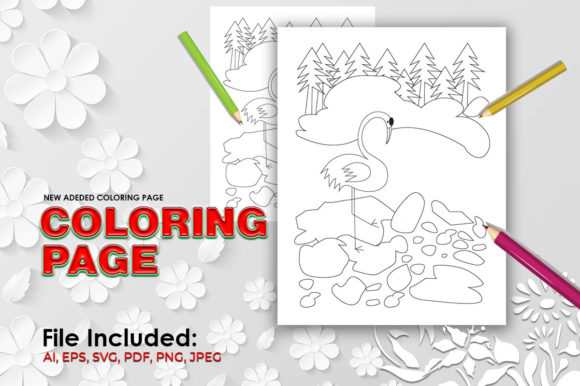
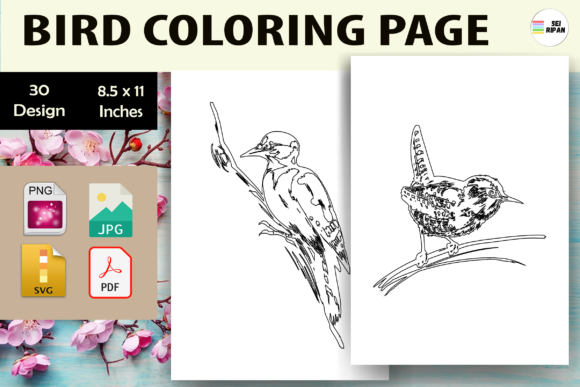
Opening Bird Coloring Page for Kids 2 - KDP, I immediately notice its clean, open-line aesthetic — not overly detailed, but full of friendly character. The bird is centered, wings gently spread, with soft curves and rounded features that read as approachable and joyful. There’s no heavy outlining or dense internal patterning — just confident, continuous outlines and a few subtle interior lines (a feather suggestion here, an eye shape there). That simplicity isn’t a limitation; it’s strategic. For embroidery designers, this means fewer stitch complications, smoother satin stitch transitions, and room for interpretation when digitizing.
From Paper to Stitch: How It Translates on Real Fabric
I tested Bird Coloring Page for Kids 2 - KDP as the core motif for a custom embroidered tote bag — cotton canvas, medium-weight, with light stabilizer. After converting the SVG into a machine embroidery design, the result held up beautifully: clear wing contours, readable beak shape, and balanced negative space around the bird’s body. Because the original line work is consistent in weight (no sudden thin-to-thick shifts), the satin stitch edges stayed crisp without puckering. On sweatshirt fleece? Slightly softer definition — expected — but still recognizable at 4–5 inches wide. As a baby embroidery piece on a onesie? Perfect scale. At 3 inches tall, it reads clearly even after multiple washes, especially when paired with high-contrast thread colors like navy on cream or kelly green on oat.
Where This Design Shines — and Where It Needs Thought
- Great for: Tote bag designs, pillow covers, tea towels, nursery wall art (as an embroidered hoop), personalized baby blankets, and small-batch boutique aprons.
- Works well on: Stable fabrics like quilting cotton, twill, denim, and midweight knits — especially when using tear-away or cut-away stabilizer.
- Use carefully on: Stretchy fabrics (like jersey) without proper stabilizer support; dark fabric where fine interior lines may vanish unless digitized with heavier underlay; curved surfaces like caps (the symmetrical shape helps, but placement near the crown seam needs testing); and ultra-thin fabrics like voile, where dense fill areas could cause show-through.
Real-World Commercial Fit: More Than Just a Coloring Page
As an Etsy seller and embroidery designer, I treat every digital embroidery file as both a creative tool and a business asset. Bird Coloring Page for Kids 2 - KDP stands out because it bridges two markets: coloring page buyers *and* crafters who want editable source files. Those 30 SVGs aren’t just “nice to have” — they’re your license to adapt. Want to add a monogrammed nest beneath the bird for a personalized baby gift? Easy. Need to simplify the wing for a 3-inch embroidered patch? Doable. Planning holiday-themed variations (a tiny wreath around the bird’s neck, snowflakes in the corners)? The vector flexibility makes it realistic — not just aspirational.
That said, don’t assume automatic embroidery readiness. This is a coloring page, not a pre-digitized embroidery file. You’ll need to digitize thoughtfully: avoid overloading the chest area with dense fill stitch, keep running stitch details minimal if scaling down below 2.5 inches, and always test small interior shapes (like the eye) on scrap fabric first. What looks bold on screen can disappear in thread — especially on textured fabric.
Design Integrity Meets Customer Trust
When customers buy a handmade product featuring Bird Coloring Page for Kids 2 - KDP, they’re not just buying a bird — they’re buying intention. The gentle, unhurried line quality signals care. It doesn’t scream “mass-produced clipart.” That matters for brand consistency, especially if you're building a cohesive nursery line or a nature-inspired craft business. I’ve seen clients respond more warmly to pieces where the embroidery feels *designed*, not dropped in — and this coloring page gives you that foundation.
But authenticity hinges on execution. If you rush the digitizing — cramming too many stitches into the tail, skipping underlay on knit fabric, or choosing low-contrast thread colors — the charm flattens. The design’s strength is its clarity, so muddy stitching undermines its entire appeal. That’s why I always check black-and-white mockups first: if the shape holds up in grayscale, it’ll hold up in thread.
Practical Notes Every Embroidery Designer Should Keep Handy
- Test Bird Coloring Page for Kids 2 - KDP on scrap fabric matching your final project’s weight and stretch.
- Review stitch density — especially around the head and wingtips — before hooping production fabric.
- Confirm your hoop size fits the intended layout; the design’s symmetry works well in round or square hoops, but avoid pushing it to the very edge.
- Inspect small details at actual stitch size: does the eye shape read? Does the beak point cleanly?
- Compare thread color contrast on both light and dark backgrounds — what works on ivory may vanish on charcoal.
- Use appropriate stabilizer: cut-away for knits, tear-away for stable wovens, and consider topping for textured fabric.
- Verify licensing terms before selling finished products or reselling digitized versions — the listing states it’s for KDP use, so confirm commercial embroidery rights separately if needed.
Final Thought: A Quietly Versatile Asset
Bird Coloring Page for Kids 2 - KDP won’t shout from the shelf — and that’s its quiet strength. It’s the kind of design that supports your voice rather than competing with it. Whether you’re stitching a one-of-a-kind personalized gift or building a repeatable small shop product line, it offers flexibility without fuss. It respects the craft: simple enough to execute well, expressive enough to feel intentional, and adaptable enough to grow with your business. Just remember — great embroidery starts with smart choices long before the needle drops. Test. Refine. Then let that little bird take flight on your next finished product.