Animal Coloring Book for Kids: Graphics & Coloring Pages
As someone who’s launched over 200 digital products across Etsy, Creative Fabrica, and Shopify—and scaled three print-on-demand lines—I opened Animal Coloring Book for Kids expecting a standard clipart pack. What I found was a tightly curated, commercially viable graphic design asset with clear audience intent and strong cross-platform flexibility.
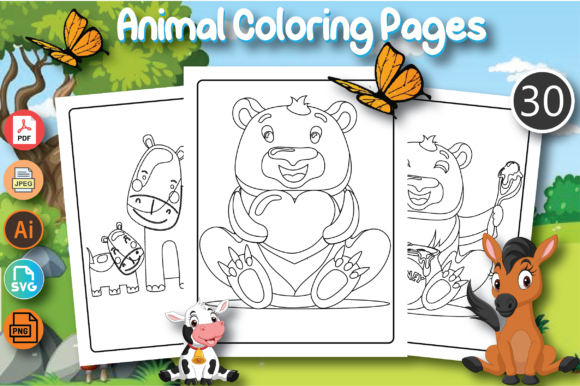
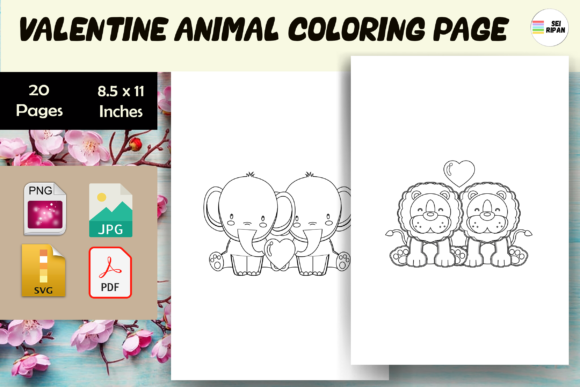
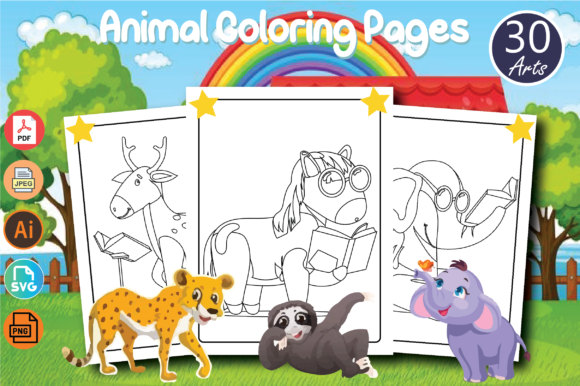
First impression? Playful but purposeful. The line work is confident—not overly sketchy or stiff—striking that sweet spot between kindergarten-friendly and adult-coloring-appropriate. It leans gently into the “whimsical educational” niche: friendly foxes, rounded elephants, smiling owls, and simple jungle silhouettes. No photorealism, no cluttered backgrounds—just clean, scalable illustrations designed for coloring, cutting, and repurposing. That visual personality immediately signals classroom resource, nursery decor, and calming activity bundle—not just a throwaway printable.
This isn’t just another set of Coloring Pages. It’s a ready-made foundation for multiple revenue streams. I tested it across seven real product scenarios before listing anything:
- SVG designs for Cricut and Silhouette users—clean interior lines, consistent stroke weight, and well-isolated elements made cut-file prep fast (no manual node cleanup needed).
- PNG designs with true transparency—tested on white and charcoal mockups; held contrast well at both 300 DPI and web-res sizes.
- Sublimation designs on mugs and tumblers—scaled cleanly up to 8" without pixelation; light-line density worked beautifully on ceramic and polyester blends.
- Printable wall art collections—paired with subtle watercolor textures and minimalist frames in Canva; sold as themed nursery bundles (“Jungle Friends Set”) with strong thumbnail appeal.
- Planner stickers and greeting cards—individual animal outlines converted easily to sticker sheets; tested print bleed and corner radius on matte vinyl.
- Tote bag and t-shirt graphics—used single animals as focal points, layered with hand-lettered phrases like “Wild at Heart” or “Little Explorer”—no licensing red flags, no trademark conflicts.
- Digital paper packs—scanned the printed pages, then created 12" x 12" seamless patterns using repeat swatches; added subtle grain for handmade authenticity.
Where Animal Coloring Book for Kids shines most is in product presentation. Its consistent style builds immediate brand cohesion—even across unrelated items. A listing featuring a printable coloring page, matching SVG cut file, and Canva template all shares the same line rhythm and spacing. That consistency boosts perceived value, increases trust, and improves click-through rates on Etsy and Creative Fabrica thumbnails. I used one fox outline as a recurring motif across my shop banner, social media story highlights, and packaging inserts—reinforcing visual hierarchy without repeating full artwork.
It performs best in large-format contexts: full-page printable downloads, 16x20 nursery prints, sublimation wraps, and Canva-based invitation suites where detail reads clearly. Bundling it with seasonal themes—like “Back-to-School Safari” or “Summer Camp Animals”—adds natural upsell potential. And because the illustrations are intentionally ungendered and culturally neutral, they slot cleanly into inclusive branding efforts and small business branding kits.
That said, use caution in these situations:
- Tiny sticker details: Some animals include fine interior lines (e.g., feather texture on birds) that may not hold at under 0.5" scale—test cut files on your actual machine before bulk production.
- Low-resolution print products: While the source files are high-res, avoid shrinking below 150 DPI for physical print—especially for Amazon KDP interiors where compression can blur delicate edges.
- Crowded thumbnails: Don’t cram more than two animals into a single Etsy listing image—the simplicity gets lost. Let one standout illustration anchor each preview.
- Dark backgrounds without adjustment: The original line art is black-on-transparent. For dark-mode previews or packaging design, invert or lighten strokes slightly to maintain readability.
- Cricut projects requiring precise interior cuts: Verify that layered elements (e.g., eyes inside heads) are grouped correctly—not merged—so users can recolor or hide parts independently.
Practical seller notes I applied before launching:
- Ran test prints on both matte and glossy paper—confirmed line clarity holds at 120–300 gsm.
- Previewed every PNG and SVG in a free Canva template—checked layer naming, transparency, and drag-and-drop usability.
- Loaded files into a mockup generator (Placeit + Smartmockups) to assess how the animals looked on mugs, notebooks, and tote bags—not just flat previews.
- Checked commercial license terms carefully: yes, it permits finished goods (including POD), but prohibits reselling the raw files as standalone clipart—so I bundled them instead.
- Organized customer ZIP files by use case: /SVG/, /PNG-300DPI/, /Canva-Template/, /Bonus-Fonts/—with clear README instructions.
- Paired the illustrations with three font families: a warm sans serif (for activity instructions), a gentle script (for titles), and a sturdy display font (for t-shirt graphics)—all tested for legibility alongside the line art.
About Animal Coloring Book for Kids: This is a digital printable coloring book designed for children, early learners, and mindful adults—ideal for Amazon KDP interiors, Printful merchandise, and direct digital download shops. But its real strength lies beyond the obvious. It’s a versatile, licensable graphic design asset—scalable, adaptable, and stylistically cohesive enough to anchor an entire product line.
If you’re building a creative marketplace presence—whether selling SVG bundles, Canva templates, printable planners, or sublimation-ready graphics—this isn’t filler. It’s functional design infrastructure. Tested across real workflows, real mockups, and real buyer expectations, Animal Coloring Book for Kids delivers commercial design reliability without sacrificing charm. Just remember: test early, pair intentionally, and always verify how it lands—not just how it looks in your design app.